Demi Cycle Supplement Spotlight #2: Methylene Blue - The Mitochondrial Miracle
Methylene Blue has been around since 1891. It enhances mitochondrial function, improves cognitive performance, and might be the cleanest energy source you've never heard of.

The Forgotten Compound Making a Comeback
Methylene blue sounds like something out of a chemistry lab, not a supplement you’d intentionally consume. The name alone makes people skeptical. Add the fact that it literally turns your urine blue-green, and most men dismiss it as too weird to consider seriously.
That’s a mistake.
Methylene blue has been used in medicine since 1891. It’s on the World Health Organization’s List of Essential Medicines. It’s been used to treat methemoglobinemia, malaria, and various infections for over a century. It’s one of the most well-studied compounds in medical history, with safety data spanning more than 130 years of clinical use.
And recently, researchers discovered something interesting: at low doses, methylene blue is a powerful mitochondrial enhancer and neuroprotective agent. It improves cellular energy production, enhances cognitive function, protects against neurodegeneration, and provides clean, sustained mental energy without the jitters or crash associated with caffeine.
Thus, in our Demi Cycle Supplement Spotlight #2 we’re covering methylene blue as it represents something most men are missing: a way to enhance energy at the cellular level rather than just stimulating your nervous system with more caffeine.
Most guys trying to optimize energy are stuck in the stimulant trap. Coffee, energy drinks, pre-workout supplements, semi-legal grey hat nootropics from sketchy Southeast asian webshop. Many of these work by triggering adrenaline and blocking adenosine receptors. They make you feel wired by activating your stress response, but they do nothing to actually improve your cells’ ability to produce energy efficiently.
Methylene blue works differently. It enhances mitochondrial function directly, improving your cells’ capacity to generate ATP (the energy currency your body runs on). The result is clean, sustained energy and mental clarity without relying on stimulants or running on stress hormones.
If you’re tired of depending on coffee just to function, if you want better cognitive performance without anxiety or jitters, or if you’re interested in long-term neuroprotection as you age, this dark blue coloured fish tank cleaner deserves your attention.

What Methylene Blue Actually Does
Methylene blue has a remarkably broad range of effects, all stemming from its impact on cellular energy production and oxidative stress.
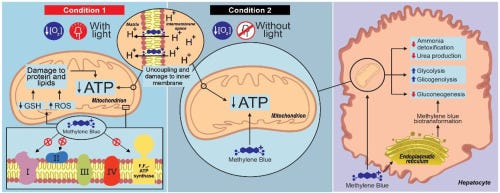
Enhances mitochondrial function and energy production. Your mitochondria are the power plants of your cells, generating ATP through a process called the electron transport chain. Methylene blue acts as an alternative electron carrier, bypassing inefficiencies in this chain and directly enhancing ATP production. More ATP means more energy available for every cellular process in your body, from muscle contraction to neurotransmitter synthesis.
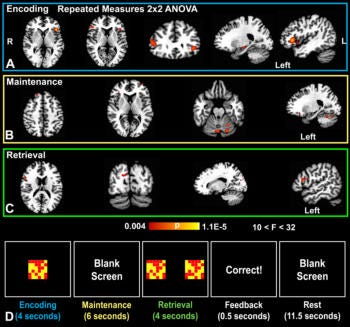
Improves cognitive function and memory. Multiple studies show that methylene blue enhances attention, working memory, and information processing speed. The mechanism involves increased cerebral blood flow, enhanced oxygen delivery to neurons, and improved mitochondrial efficiency in brain cells. Your brain is metabolically expensive, consuming roughly 20% of your body’s energy despite being only 2% of your body weight. When you enhance mitochondrial function, cognitive performance improves measurably.
Powerful neuroprotective effects. Methylene blue protects neurons from oxidative damage, reduces inflammation in brain tissue, and dissolves protein aggregates associated with neurodegenerative diseases like Alzheimer’s and Parkinson’s. Research shows it can slow cognitive decline in animal models and may have similar effects in humans, though more human studies are needed.
May slow brain aging. By reducing oxidative stress, improving mitochondrial function, and protecting against protein aggregation, methylene blue addresses several mechanisms of brain aging simultaneously. While we can’t claim it’s a longevity drug based on current evidence, the mechanistic basis for anti-aging effects in neural tissue is solid.
Antimicrobial and antiviral properties. Methylene blue has been used historically to treat malaria and various infections. It disrupts microbial metabolism and has shown activity against certain viruses in laboratory studies. While this isn’t the primary reason most people use it today, it’s worth noting as part of the compound’s broad biological activity.
Replaces need for coffee in the morning. This is the subjective benefit many users, including our clients and myself reported. As methylene blue enhances mitochondrial ATP production, you get genuine cellular energy rather than nervous system stimulation. The result is alertness and mental clarity without the jitteriness, anxiety, or afternoon crash that often accompanies caffeine use.
How Methylene Blue Works (Biological Mechanisms)
The mechanisms explain why methylene blue produces such broad effects across energy, cognition, and neuroprotection.
Bypasses Complex I-III in the electron transport chain, enhancing ATP production. The electron transport chain in your mitochondria has several complexes that can become bottlenecks, especially as you age or under conditions of oxidative stress. Methylene blue can accept electrons from NADH and donate them directly to cytochrome c, bypassing Complexes I-III. This alternate pathway maintains ATP production even when normal mitochondrial function is impaired.
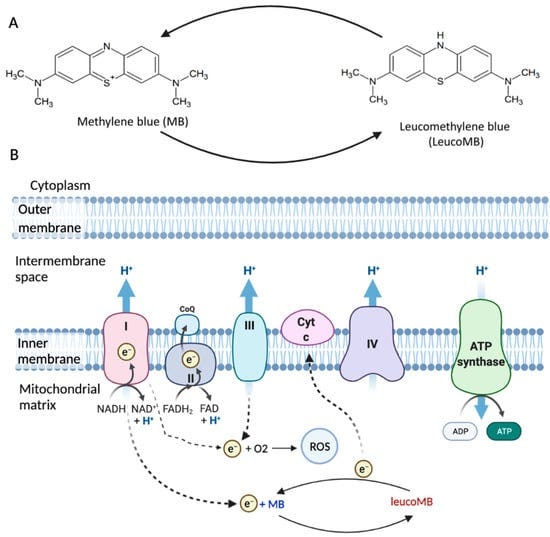
Acts as an electron cycler in mitochondria. Methylene blue alternates between oxidized and reduced states, facilitating electron flow through the mitochondrial respiratory chain. This cycling activity maintains efficiency and prevents the buildup of reactive oxygen species that damage cellular components.
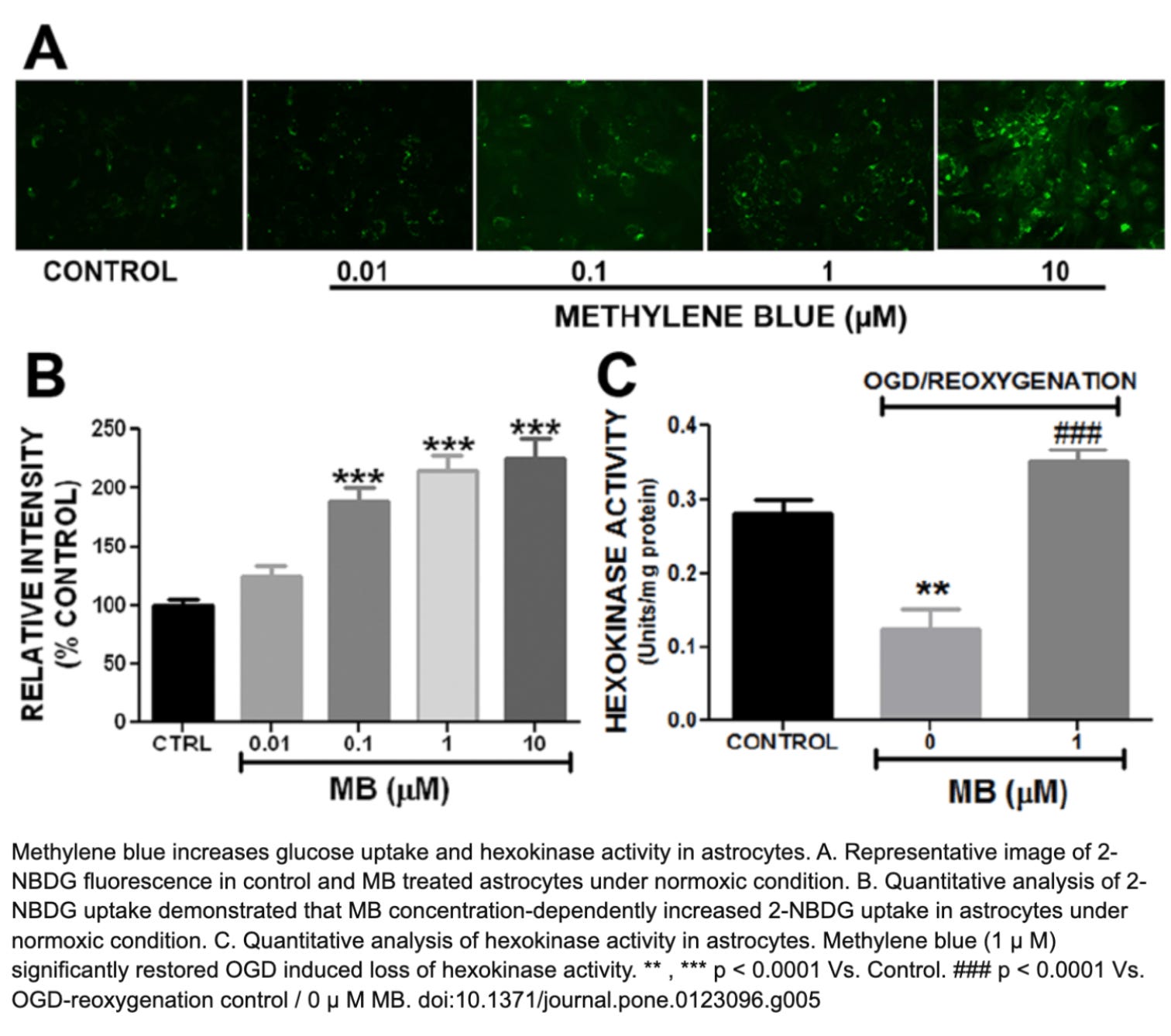
Increases oxygen consumption and glucose metabolism in brain tissue. Brain imaging studies show that methylene blue increases metabolic activity in regions involved in memory and attention. Enhanced glucose metabolism means neurons have more fuel available for synaptic transmission, neurotransmitter synthesis, and maintaining cellular integrity.
Inhibits monoamine oxidase A (MAO-A). MAO-A is an enzyme that breaks down neurotransmitters like serotonin, dopamine, and norepinephrine. By inhibiting this enzyme, methylene blue increases the availability of these neurotransmitters, improving mood, focus, and motivation. This is also why methylene blue should be avoided if you’re taking SSRIs (selective serotonin reuptake inhibitors), as the combination can lead to dangerous serotonin syndrome.
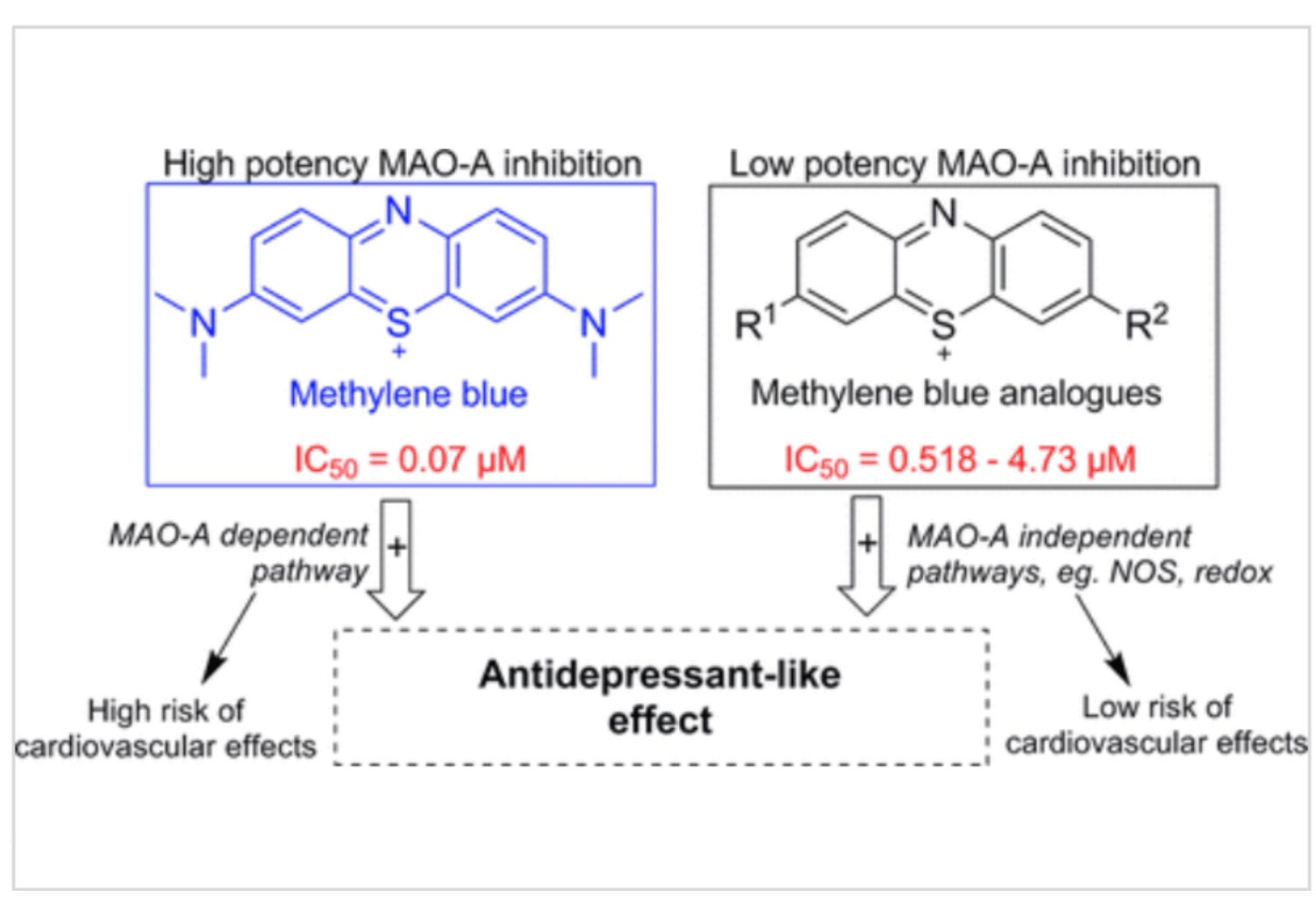
Powerful antioxidant reducing oxidative stress. Despite being a redox-active compound, methylene blue acts as a net antioxidant at low doses. It scavenges reactive oxygen species and protects cellular components from oxidative damage. This is particularly important in the brain, where oxidative stress contributes to aging and neurodegeneration.
Dissolves protein aggregates linked to neurodegeneration. Alzheimer’s disease involves accumulation of tau protein tangles and amyloid plaques. Parkinson’s involves alpha-synuclein aggregates. Methylene blue has been shown in research to disaggregate these protein structures and prevent their formation. This mechanism is why it’s being studied as a potential treatment for neurodegenerative diseases
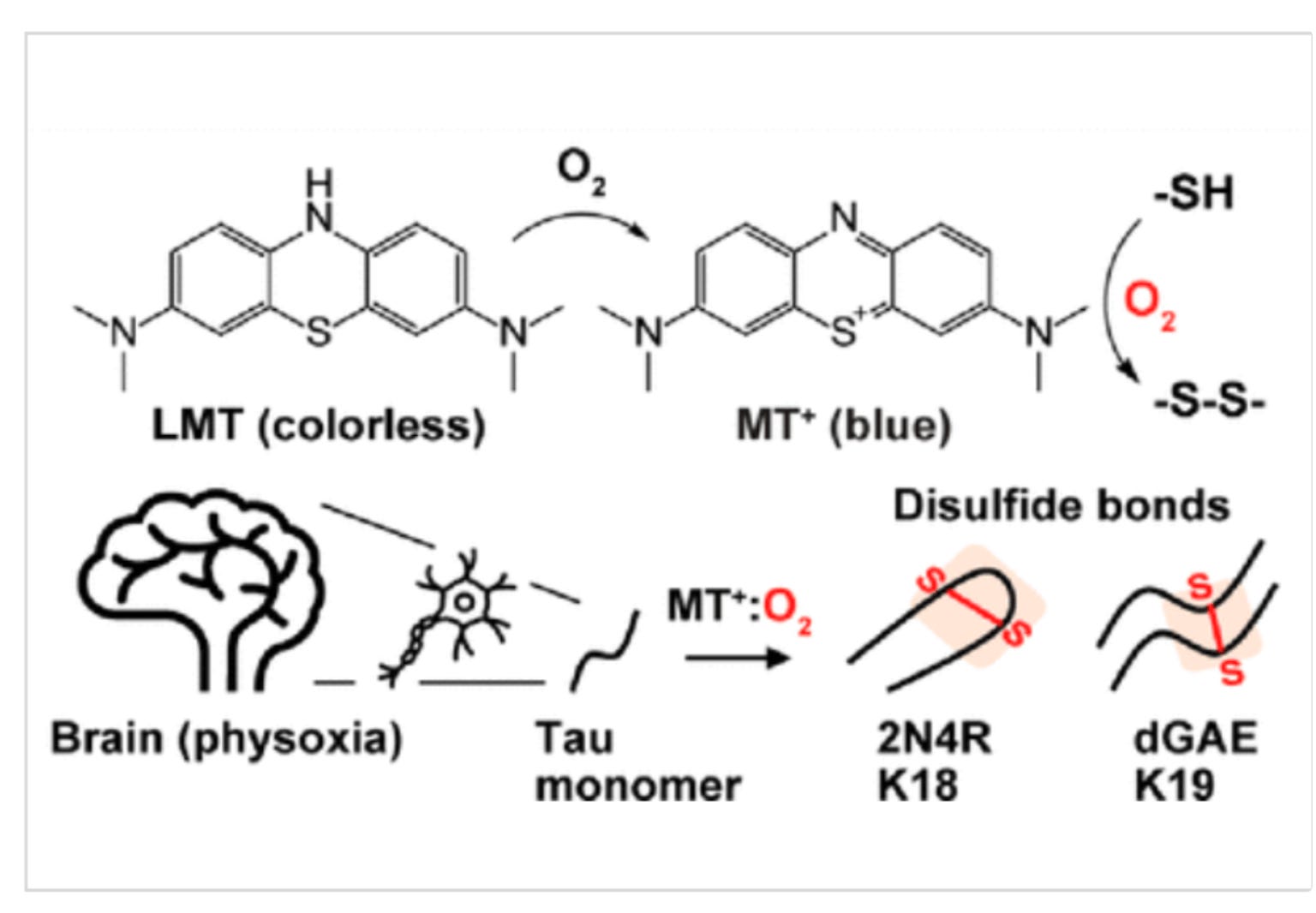
The combination of enhanced energy production, increased antioxidant protection, improved neurotransmitter availability, and direct neuroprotective effects makes methylene blue uniquely valuable for cognitive optimization and long-term brain health.
Dosage & How to Take Methylene Blue
Getting the dose right is critical with methylene blue because the dose-response curve is hormetic. Low doses provide benefits, while high doses might actually impair mitochondrial function and cause side effects.
Daily maintenance dose: 20 drops of pharmaceutical-grade solution
This typically equates to about 10-20mg of methylene blue, depending on the concentration of your solution. Most pharmaceutical-grade methylene blue solutions are 1% concentration, meaning 1mg per drop (Do NOT ever consider taking the 3% version, that’s for cleaning fish tanks…horrendous for your stomach). Twenty drops gives you roughly 20mg, which is within the optimal range for mitochondrial enhancement and cognitive benefits.
Provides clean energy without coffee jitters
Methylene blue delivers mental clarity and sustained energy without the overstimulation, anxiety, or subsequent crash associated with caffeine. You feel alert and focused, but calm rather than wired.
Start with 5-10 drops, gradually increase
Methylene blue can be stimulating, especially if you’re sensitive to compounds that affect neurotransmitters. Start at the low end (5 drops, roughly 5mg) and assess your response over a few days. Gradually increase by 5 drops every few days until you reach the optimal dose for your needs, typically 15-20 drops.
Pharmaceutical grade only (USP certified methylene blue)
This is non-negotiable. You must use pharmaceutical-grade, USP (United States Pharmacopeia) certified methylene blue intended for human consumption. Industrial-grade methylene blue contains heavy metal contaminants and impurities that are toxic. The supplement must explicitly state it’s pharmaceutical grade and safe for human use.
Take morning on empty stomach or with water
Methylene blue is absorbed well on an empty stomach. Most people take it first thing in the morning, either directly or diluted in a glass of water. Some find it works better with a small amount of vitamin C, which can enhance its activity.
AVOID if taking SSRIs (risk of serotonin syndrome)
Methylene blue is a monoamine oxidase inhibitor. If you’re taking SSRIs (Prozac, Zoloft, Lexapro, etc.), combining them with methylene blue can cause serotonin syndrome, a potentially dangerous condition characterized by agitation, confusion, rapid heart rate, high blood pressure, and in severe cases, seizures or loss of consciousness. Do not use methylene blue if you’re on any medication that affects serotonin levels without consulting your physician.
Best Timing & Cycling Protocol
Strategic timing and cycling maximize benefits while preventing tolerance and maintaining effectiveness.
Take early in the day (can be stimulating, replaces coffee need)
Methylene blue provides mental energy and alertness, so taking it early ensures it doesn’t interfere with sleep. Most users take it upon waking or within the first hour of the day. As it enhances mitochondrial function rather than just blocking adenosine receptors like caffeine, the energy feels cleaner and more sustained throughout the day.
No longer need coffee in the morning thanks to this
Personally this was the greatest benefit I’ve experienced, completely removing dependence on the morning coffee. You get the alertness and mental clarity without needing stimulants. This doesn’t mean you can’t still enjoy coffee, but you’re no longer dependent on it just to feel human in the morning.
Cycling recommended: 5 days on, 2 days off
Like most compounds that affect neurotransmitter systems, methylene blue benefits from cycling to prevent tolerance. A common protocol is 5 days on (Monday through Friday), 2 days off (weekends). This maintains effectiveness while giving your body periodic breaks from MAO-A inhibition.
Some people prefer other cycling protocols: 4 days on, 3 days off, or even alternating days. Experiment to find what maintains benefits without building tolerance or dependence.
Ensure adequate hydration throughout day
Methylene blue has mild diuretic properties and can be mildly dehydrating. Drink water consistently throughout the day, similar to the advice regarding caffeine consumption. What’s more you wouldn’t even enjoy the full cognitive and energetic effects without proper hydration.

WARNING: Turns urine blue-green (harmless but startling)
This is the most visually striking effect of methylene blue and catches everyone off guard the first time. Your urine will turn bright blue-green within a few hours of dosing. This is completely harmless and simply indicates that your body is excreting excess methylene blue. The color is dramatic enough that you should warn household members or significant others so they don’t panic. It’s startling but medically insignificant.
Who Benefits Most from Methylene Blue
While many people can benefit from improved mitochondrial function, certain populations will notice the most dramatic effects.
Men seeking cognitive enhancement without stimulants. If you want better focus, memory, and mental clarity but are sensitive to caffeine or tired of relying on stimulants, methylene blue offers a fundamentally different approach. You’re enhancing cellular energy production rather than just activating your stress response.
Anyone experiencing afternoon crashes or brain fog. When your mitochondrial function is suboptimal, mental fatigue is one of the first symptoms. Methylene blue directly addresses the root cause by improving ATP production in neurons. Users often report that the 2-3pm brain fog they’ve dealt with for years simply disappears.
People concerned about long-term brain health and aging. The neuroprotective mechanisms (antioxidant effects, protein aggregate dissolution, improved mitochondrial function) make methylene blue valuable for anyone thinking long-term about cognitive health. While we can’t claim it prevents dementia based on current human evidence, the mechanisms suggest potential benefit for brain longevity.
Those trying to reduce caffeine dependence. If you’re stuck in the cycle of needing coffee just to function, methylene blue provides an exit strategy. It gives you genuine energy at the cellular level, reducing the need for stimulants. Many people successfully transition from multiple cups of coffee daily to just methylene blue in the morning.
Men over 40 experiencing declining mental sharpness. Mitochondrial function naturally declines with age, contributing to reduced cognitive performance. Methylene blue can partially compensate for this decline by enhancing mitochondrial efficiency in aging cells.
Anyone with high cognitive demands (executives, entrepreneurs, students). When your work requires sustained mental performance, enhanced mitochondrial function translates directly to better output. You maintain focus longer, process information faster, and experience less mental fatigue throughout demanding days.
What Makes This Different from Caffeine
Understanding the distinction between methylene blue and caffeine clarifies why they’re fundamentally different tools.
Caffeine works by blocking adenosine receptors, preventing the signal that makes you feel tired. It also triggers dopamine and adrenaline release, creating a sense of energy through nervous system activation. You feel alert, but you’re not actually producing more cellular energy. You’re just blocking the signal that tells you you’re tired and activating stress hormones.
Methylene blue works by enhancing mitochondrial ATP production. You’re genuinely increasing your cells’ capacity to generate energy. The alertness and mental clarity come from neurons having more fuel available, not from blocking fatigue signals or triggering stress responses.
The subjective difference is noticeable. Caffeine makes you feel wired, sometimes anxious or jittery. Your heart rate increases. You might feel scattered or have racing thoughts. Then a few hours later, you crash as the adenosine that’s been building up finally binds to receptors and the adrenaline wears off.
Methylene blue makes you feel clear-headed and energized in a calm way. There’s no jitteriness, no anxiety, no scattered feeling. Your focus is sustained rather than manic. And there’s no crash because you’re not depleting stress hormones or accumulating adenosine debt.
Both have their place. Caffeine is useful for acute performance demands (before training, before important meetings). Methylene blue is better for sustained cognitive performance throughout the day without the downsides of stimulant use.
Many people use both strategically: methylene blue in the morning for baseline energy and cognitive function, then caffeine only when specific performance demands require an additional boost. This minimizes caffeine dependence while maximizing cognitive performance.
Practical Considerations and Safety
Methylene blue has an excellent safety profile when used correctly, but there are important considerations.
Quality matters immensely. Only use pharmaceutical-grade, USP certified methylene blue explicitly sold for human consumption. Industrial methylene blue contains heavy metals and toxic contaminants. The price difference between pharmaceutical grade and industrial grade is minimal, and using the wrong type is genuinely dangerous. What’s more if you want to cover your yearly supply of methylene blue for LESS than a 100 bucks, you can order powdered methylene blue that you can dissolve in water, creating your own solution at home (don’t do this if numbers & maths are your weaknesses, dosing & concentration must be accurate).
Drug interactions are serious. Methylene blue is a monoamine oxidase inhibitor. Beyond SSRIs, it can interact with other medications affecting serotonin, including certain pain medications (tramadol), migraine medications (triptans), and other antidepressants (SNRIs, MAOIs). If you’re on any prescription medications, consult your physician before using methylene blue.
Pregnancy and breastfeeding. There’s insufficient data on methylene blue use during pregnancy or breastfeeding. Err on the side of caution and avoid it during these periods.
G6PD deficiency. People with glucose-6-phosphate dehydrogenase deficiency should not use methylene blue, as it can trigger hemolytic anemia in these individuals. This is a genetic condition more common in people of African, Mediterranean, or Southeast Asian descent. If you have G6PD deficiency, methylene blue is contraindicated.
The blue urine is not a concern. It’s worth repeating because it startles everyone: your urine turning bright blue-green is completely normal and harmless. This is excess methylene blue being excreted. It doesn’t indicate toxicity or problems. The color returns to normal once the compound clears your system.
Start low and assess. Individual responses vary. Some people feel dramatic effects from just 5mg. Others need 15-20mg to notice benefits. Start at the low end and gradually increase based on your response.
The Research Behind the Hype
Methylene blue isn’t some untested biohacking compound or a Chinese research chemical under the fancy brand of “peptides” that are becoming increasingly popular nowadays. It has over 130 years of medical use and extensive research backing its effects.
Studies on cognitive function consistently show improvements in memory, attention, and processing speed. A study published in Pharmacology Biochemistry and Behavior (Callaway, N.L., Riha, P.D., Bruchey, A.K., Munshi, Z. and Gonzalez-Lima, F. (2004)) found that low-dose methylene blue improved memory retention. Other research has shown enhanced brain metabolism measured via PET scans after methylene blue administration.
The neuroprotective effects have been demonstrated in animal models of Alzheimer’s, Parkinson’s, and other neurodegenerative diseases. Methylene blue reduces tau protein aggregation, decreases amyloid plaque formation, and protects neurons from oxidative damage in these models. Human trials are ongoing, but the mechanistic basis is solid.
Mitochondrial enhancement has been proven in multiple studies showing that methylene blue increases ATP production, improves electron transport chain efficiency, and reduces oxidative stress in mitochondria. The benefits are clearly measurable instead of being based on pure theory.
The antimicrobial properties have been known since the late 1800s. Methylene blue has been used to treat malaria, methemoglobinemia, and various infections for over a century. Its mechanism involves disrupting microbial metabolism and has proven effective in clinical settings.
This isn’t hype or marketing. Methylene blue is one of the most well-studied compounds in medical history, and the cognitive enhancement effects at low doses are a relatively recent discovery building on decades of research in other medical contexts.
The Bottom Line on Methylene Blue
Most men trying to optimize energy are trapped in stimulant dependence, using caffeine to compensate for poor sleep, chronic stress, and suboptimal cellular function. Methylene blue offers a different approach: enhancing energy production at the mitochondrial level rather than just activating your stress response.
The cognitive benefits are real and measurable. Better focus, improved memory, enhanced mental clarity, and sustained energy without jitters or crashes. The neuroprotective effects suggest long-term value for brain health as you age. And the subjective experience of clean, calm energy often eliminates the need for morning coffee entirely.
The Demi Cycle recommendation:
Start with 5-10 drops (5-10mg) of pharmaceutical-grade, USP certified methylene blue first thing in the morning. Assess your response over a few days. Gradually increase to 15-20 drops if needed. Cycle 5 days on, 2 days off to maintain effectiveness and prevent tolerance.
Avoid if you’re taking SSRIs or other medications affecting serotonin. Ensure you’re buying pharmaceutical grade only (industrial methylene blue is toxic).
Expect your urine to turn bright blue-green. This is normal and harmless, though visually dramatic.
Track your response over 2-3 weeks. Most people notice improved mental clarity, sustained energy throughout the day, reduced brain fog, and decreased dependence on caffeine. If you’re mitochondrially compromised (which many are from chronic stress, poor sleep, and aging), the effects are life-changing.

This is advanced supplementation for cognitive optimization and long-term neuroprotection. It’s not as foundational as zinc, but for men serious about mental performance and brain health, methylene blue is one of the most effective tools available.
Next in the Supplement Spotlight series: We’ll cover another critical compound that most men are missing. Same depth, same practical guidance, same focus on mechanisms and implementation. Stayn tuned ;)
If you’re ready to optimize your entire supplement stack as part of a complete system for performance, body composition, and longevity, Apply Here for a free 1-on-1 consult.
Until then,
Keep it Lean & Energetic,
Best,
Coach Abris
More ways we can help you Drop fat and fix your metabolism:
Ready to shred fat and boost your energy levels sustainably? Book a free 1-on-1 Strategy Call and discover how our systems can help you achieve a lean & energetic physique — without counting calories or spending hours in the gym. We’ll build you a plan that fits your lifestyle and goals and hold you accountable with our tailored 1:1 coaching 💪 Apply Here
Disclaimer: This email is for educational purposes only and is not medical, legal, or financial advice. Consult with qualified professionals before making any health, legal, or financial decisions.